Introduction

Fun. Friendly. Familiar. That's the new YZF R2 for me. We spent 20 minutes riding the bike flat out at Madras International Circuit, so don't expect this review to talk about ride quality, pillion comfort, rideability, or fuel economy. Instead, we will talk about handling, braking, racing ergos, and whether you should consider getting one. But first, some details.
The Visuals
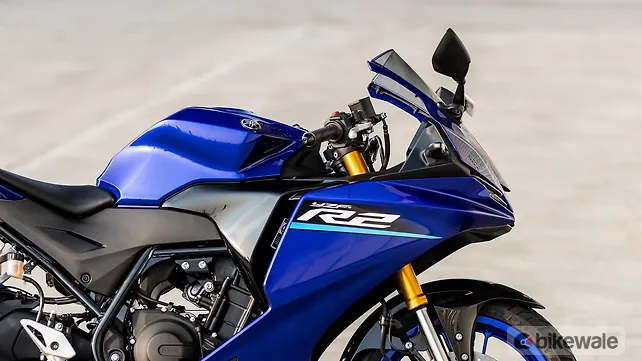
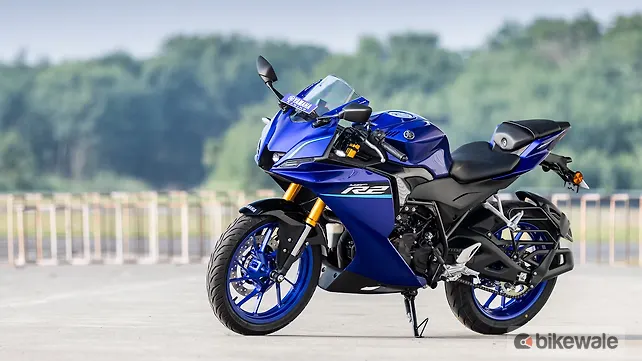
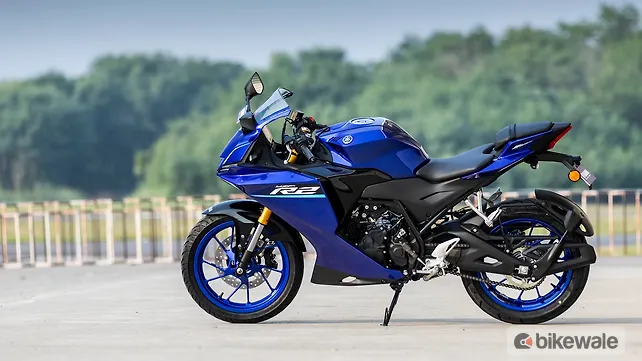
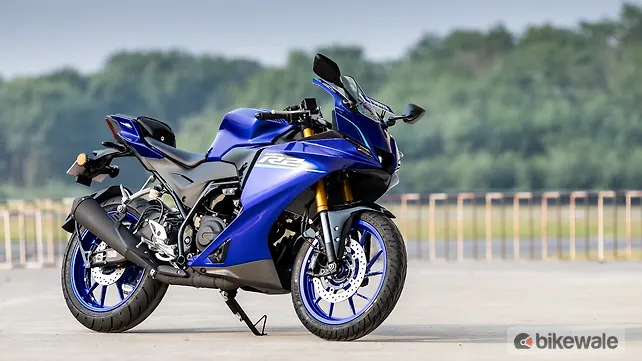
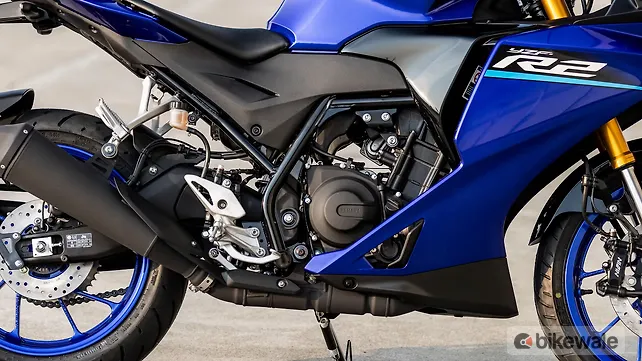
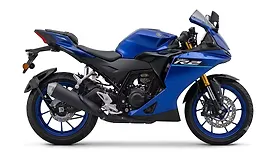
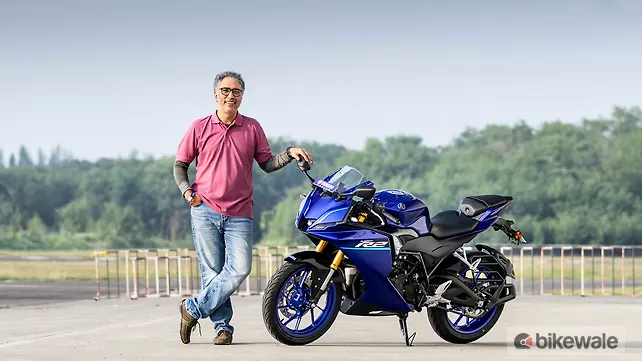
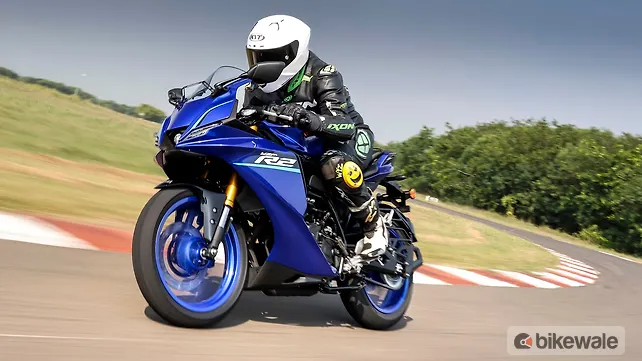
The new Yamaha R2 can be had in standard guise or as an R2M. We picked the standard motorcycle in Yamaha’s Racing Blue colour. And immediately, the R2 looked like an R15 to us. Yes, I understand that it uses completely different panels - the front fairing is new, as are the side and tail panels, and it uses a different set of DRLs as well. Plus, the exhaust is different, and the R2 now runs gold front forks. But, to the casual observer, it might come across as a version of the R15 rather than an all-new bike.
It is similar to the R15 in other ways as well. All the matte black plastic on the bike - side panel, exhaust shield, and the tail-lamp surround - continues to look cheap. The rest of the motorcycle, on the other hand, is beautifully put together. It feels like a quality thing that will last. Much like the R15, if you will. As far as colours go, apart from this blue, you can have it in white, grey, black, and the M, which is a combination of black and grey.
The Package
Now, the R2 might look similar to the R15, but underneath, these are two completely different motorcycles. The R2 has ditched the more expensive and rigid twin-spar frame for a more regular single-downtube diamond chassis. The swingarm on both motorcycles is still an aluminium unit. The suspension, however, seems to be carried over. Both motorcycles use 37mm USD forks at the front with 130mm of travel, and a linked monoshock at the back with a stroke of 97mm.
Braking hardware has seen a change. The R2 uses a radially mounted four-pot brake calliper instead of a regular axially mounted two-piston one on the R15. The brake disc sizes - front and back - however, remain unchanged. The tyres too — make and size, and probably compound - are identical on the R15 and the new R2: 100/80-17 at the front, and a 140/70 R17 radial tyre at the rear.
The engine, like the chassis, is completely different from the R15. The two don’t even share the same bore or stroke values; the R2 has both a higher stroke and a significantly higher bore, making it properly oversquare compared to the near-square layout of the R15. Now, the R2 doesn’t get VVA tech like the R15, but it does get dual overhead cams instead of an SOHC head on the R15 to manage combustion across the rev range. The R2 makes around 26bhp; 8bhp more than the R15. And around 19Nm of peak torque, which is 5Nm higher. Interestingly, as per the power and torque graphs shown by the Yamaha R&D team, not only are these figures higher, they sit above the R15’s across the complete RPM range.
Feature-wise, the R2 gets a bi-directional quickshifter, traction control, riding modes, an assist and slipper clutch, LED lighting, dual-channel ABS, and a 5-inch colour TFT display. The latter is Bluetooth-compatible for calls, SMS, music playback, and app connectivity. The R2M additionally gets adjustable levers, keyless start, and preload-adjustable front forks.
The Ride
Let’s answer the one thing most of the world is concerned about: Is the R2 better or worse than the R15, given it doesn’t have VVA or a Deltabox frame? Simple answer: the R2 is better. Now, before you come knocking at my door with torches ablaze, let me explain.
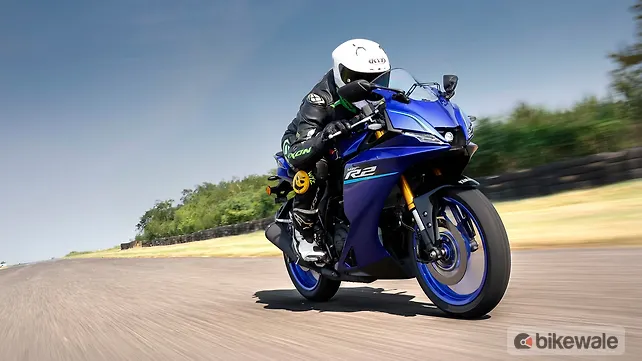
The R2 makes more power and torque no matter how you slice the RPM chart. As a result, you have better low-, mid-, and top-end performance compared to the R15. Coming out of corners, the R2 feels more alive. It was also willing to pile on revs without feeling lethargic when I picked a gear higher than ideal coming out of corners. And it had no problem revving to its redline close to 11,500rpm even in 5th gear. Also, we only rode it in Sport mode; just didn’t feel like giving up on any performance.
Now, will you miss the VVA kick on the R2? I am not sure because on the track we were never in the RPM range to feel that kick. But we will have the answer to that when we ride the bike on the road in Mumbai. But the torque curve that was presented showed a clear spike in the torque around the 6,000rpm mark. Yamaha engineers say this spike is coupled with a change in intake note to make the bike feel sporty. Again, on the track with the earplugs in, I didn’t hear a change. But it might be premature to rubbish Yamaha’s claims.
The throttle, meanwhile, is easy to modulate, the power delivery is linear and friendly, and at MIC I didn’t find it slow or boring. As for the vibrations, the bike did leave me with buzzing hands after our short 20-minute ride. But I would reserve my judgement on how subdued or loud these vibrations are in the regular operating rpm range because we were sitting close to the redline almost all through our ride.
Now to the other elephant in the room - absence of the Deltabox frame.
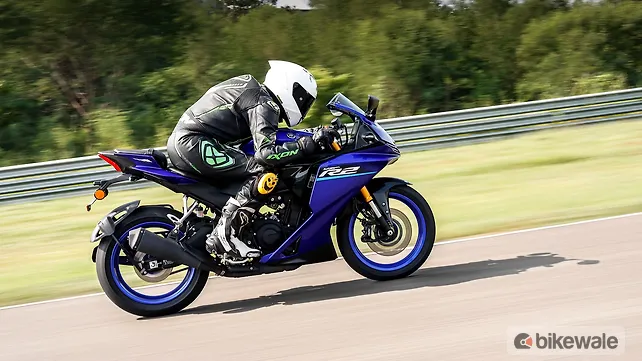
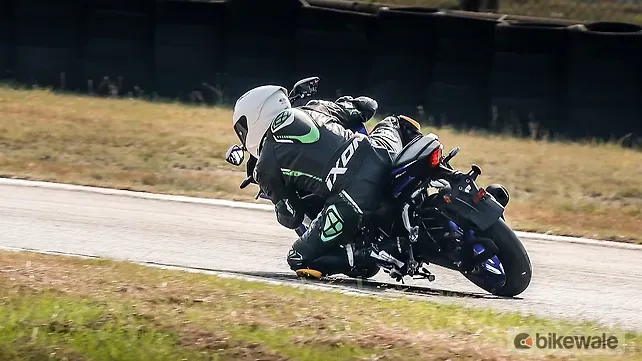
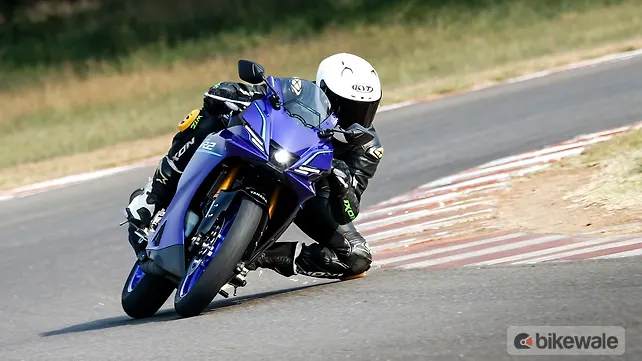
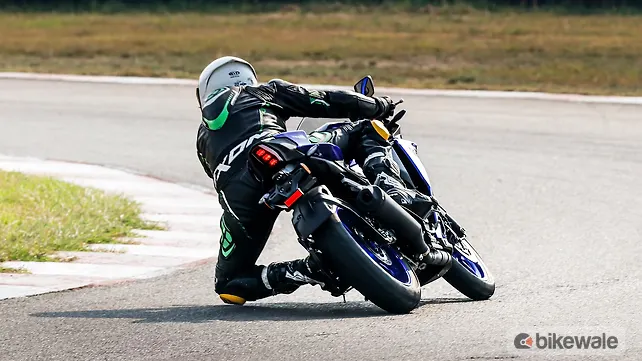
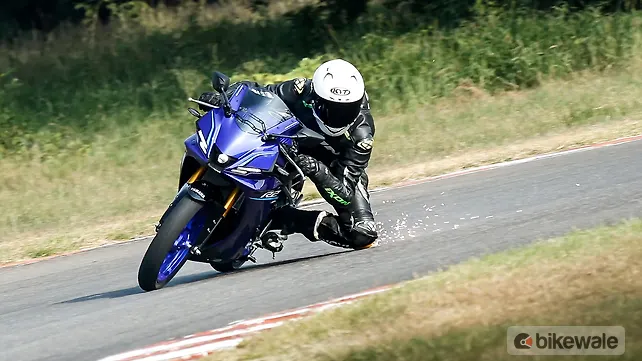
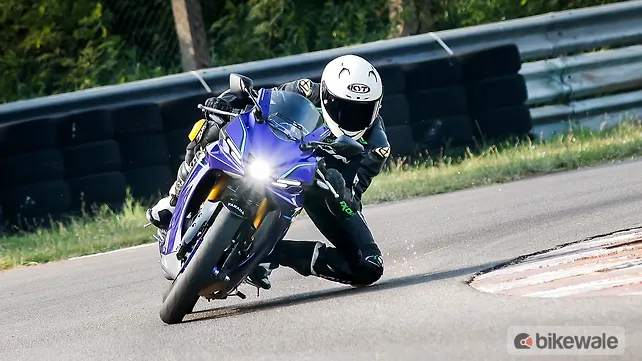
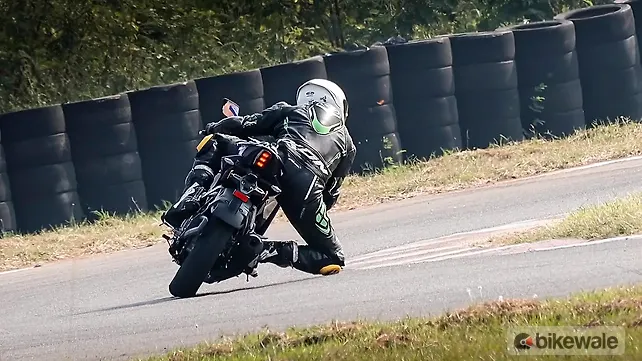
Again, I didn’t miss it. The R2 uses an almost identical suspension and tyre combo as the R15. And tipping into corners - the slow and the fast, as well as making quick direction changes - it felt as agile, willing, and stable as the R15. There’s plenty of cornering clearance too. And the communication from the chassis and tyres of what they are up to is pretty loud and clear. Even when leaned over, it doesn’t wallow or buck or give you any reason to worry. Plus, it doesn’t react violently to throttle corrections, making it easier to correct lines mid-corner.
If anything, the brakes could do with more power. The feel and progression are strong, which should allow the brave to solidly trail-brake into corners, but I found them a tad too squishy to completely rely on them.
I liked the seating ergos. The R2 has a less aggressive seating triangle than the R15, and continues to have enough good real estate for the rider to hook onto the bike when leaning. As a result, it felt almost effortless to ride and to move from side to side, corner after corner, lap after lap. This should bode well for those looking to get one for daily commutes or take one for a weekend ride.
Conclusion
To sum it up, the R2 is better than the R15. And it is certainly worth spending the extra money. It retains what makes the R15 a lovely motorcycle, but builds on it. Yes, it doesn’t have the same bragging tech as its smaller-capacity sibling. And it looks quite similar to it as well, which might disappoint a few. But overall, if you are looking for a quicker and more comfortable R15, the R2 might be the answer.
Photography: Kaustubh Gandhi
Gallery
1/23
Yamaha R2 Left Front Three Quarter
Double Click to Zoom