Introduction

The Himalayan 440 is not just a successor to the 411 with a slightly bigger engine. Royal Enfield has, instead, tried to fix a few niggles while keeping the core philosophy unchanged. This is still a simple yet rugged and capable adventure tourer, with strong off-road credentials. And a lot of motorcyclists praised Royal Enfield on social media for bringing the OG Himalayan back. However, we have been wondering whether the motorcycle still makes sense in 2026, especially considering you have the more modern but costlier Himalayan 450 to choose from RE’s stable? After spending close to a week with the bike, testing it in every possible scenario, we have a detailed answer for you.
Design and Quality
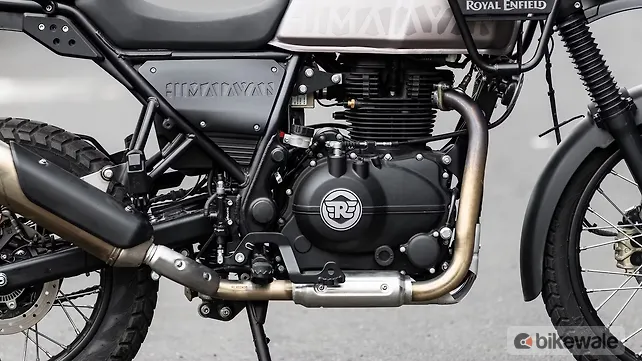
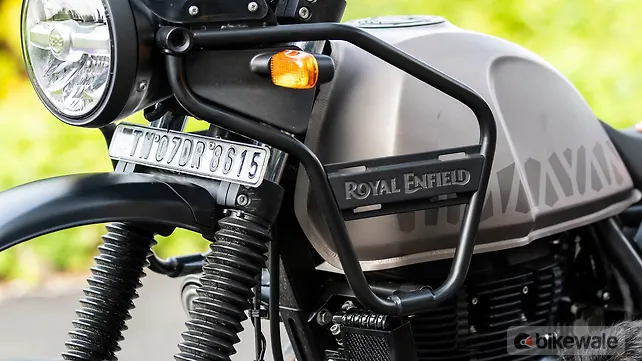
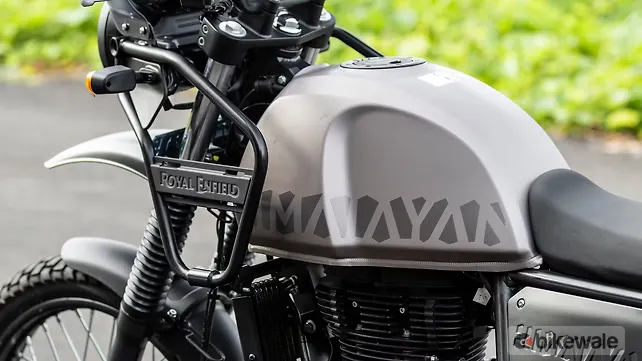
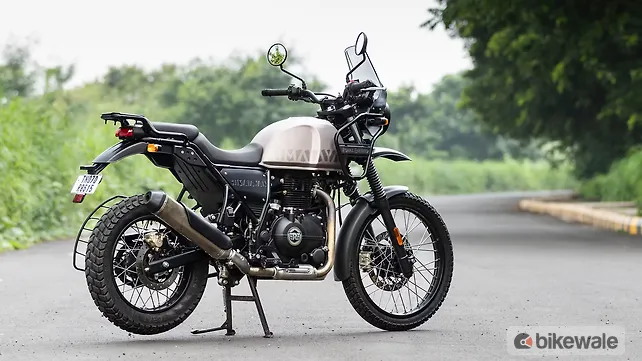
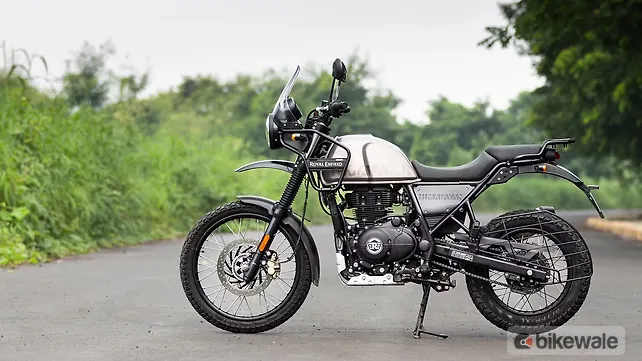
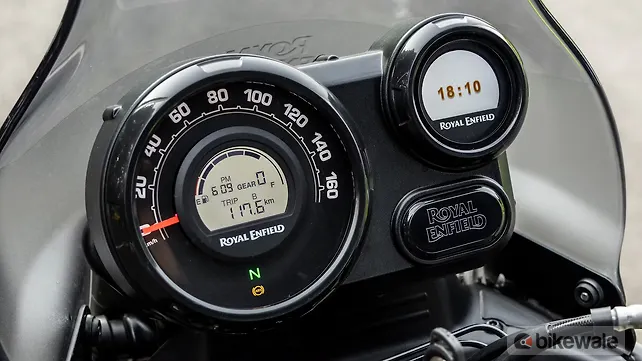
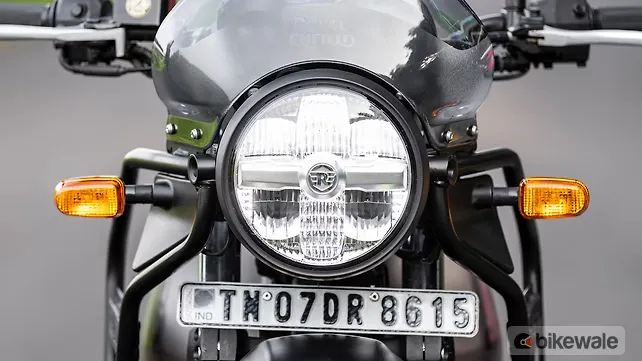
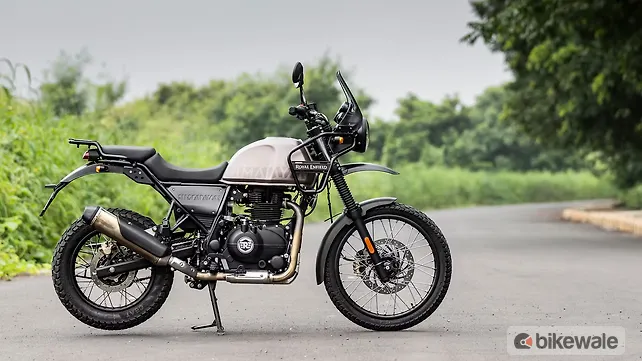
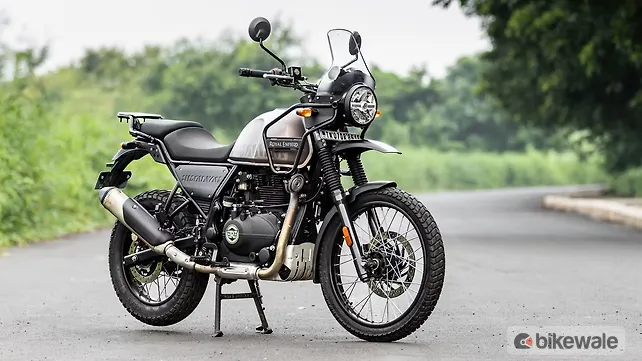
If you look at the Himalayan 440 and 411 side by side, it will be difficult to tell them apart at first glance. However, look closely, and the differences immediately come to the fore. The headlamp, for instance, is the new LED unit which is common across Royal Enfield motorcycles now. The instrument cluster is a much simpler single-pod, semi-digital unit with the Tripper navigation sitting beside. Although it doesn’t have a prominent ‘440’ badge anywhere on the bodywork except the small sticker on the fuel tank, the new colours are a clear giveaway of its identity.
We are glad that RE retained the industrial and purposeful stance of the motorcycle. Elements like the boxy fuel tank, the tank cage, and the tall stance give the Himalayan its true visual identity.
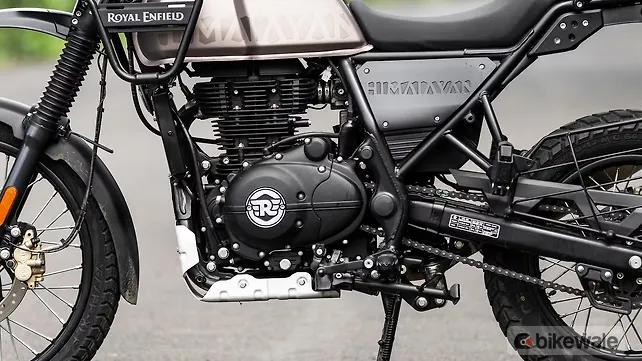
It is a notch above the 411 in terms of quality and that’s easily discernible through the improved tactility and quality of the switchgear and the finishing of paint on its panels. Even the smaller elements like the aluminum clutch and brake levers and mirrors feel a better built than before.
Ergonomics and Comfort
Despite looking fairly tall and intimidating, the Himalayan 440 offers a very accessible seat height of 800mm, which is the same as the 411. And it doesn’t come at the cost of ground clearance, which stands at an impressive 220mm. Kudos to RE for achieving that. It’s also quite narrow around the area where your inseam sits. Hence, getting on the bike and flat footing is easy, especially if you’re as tall as I am, with a 5’11’’ frame. Once on the saddle, you’ll appreciate the spacious seat and the neutral positioning of the footpegs. The handlebar is placed a bit far and demands that you stretch your arms out a little, but that only adds to the commanding riding posture. Overall, it continues to be a fairly comfortable bike, for both short and long distances.
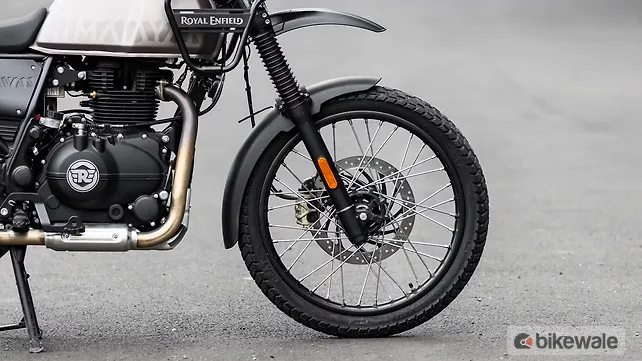
When it comes to ride quality, the Himalayan 440 is brilliant for a bike that incorporates a very simple setup comprising a telescopic fork and monoshock. The 21-inch front wheel, 200-180mm travel for the front and rear, and the comfort-oriented suspension tuning work their magic on largely poor roads of Mumbai. Minor patchworks or undulations of cemented roads are handled with incredible plushness. And if you miss spotting a bigger bump and gun through it, all you feel is a minor kick in the back and the motorcycle regains composure in no time. Of course, the setup doesn’t feel as sophisticated as that of the Himalayan 450, but it works like a charm most of the time. You can literally stand up and go full send through literally any kind of road.
Performance and Handling
The bump in displacement and the addition of a sixth gear truly work in the Himalayan 440’s favour. It continues to be a very relaxed motorcycle to ride in the city. Strong low and mid-range torque facilitate the bike with great tractability, and you can chug along at slower speeds in higher gears without much drama. You can be in third or fourth gear at 30-40kmph and the motorcycle thumps its way forward confidently. Even overtaking doesn’t always require you to downshift.
The clutch, although still heavy, is lighter than the 411 and doesn’t cause much trouble, even after spending a few minutes in jam-packed traffic. The gearbox is fine too, but you tend to come across occasional false neutrals between 4th and 6th gears.
It’s on the open road that the improvement in its engine performance truly becomes evident. The motorcycle doesn’t feel as stressed at 100kmph as before. The vibrations are much more in control and the mirrors don’t buzz violently. Even overtaking doesn’t require a lot of planning and you just need to go one cog down to pull ahead of slower vehicles while riding at around 100kmph. Well, the motorcycle doesn’t even mind 120kmph, but that’s where the limit starts to approach.
When the time comes to slow down, the front brake delivers a decent bite with a lot of progression. Even the lever feel is on the softer side and you need to pull it all the way in to stop in emergency situations. At first, the braking performance may feel a bit underwhelming, but it’s acceptable for a bike that’s also meant to be ridden off-road. You tend to start judging the bite point pretty well in no time. The rear brake, meanwhile, offers great progression and sliding the rear out off-road isn’t scary at all.
With a 1460mm wheelbase and 199kg kerb weight, the Himalayan 440 is a long and heavy motorcycle, and that shows in the way it handles. Switching lanes requires a bit of effort and it feels lazy while going around corners. And if your inputs aren’t measured around bends, the suspension does feel a bit wallowy. That said, if you keep your inputs gentle and take on the twisties at a calm pace, the Himalayan is still a fun motorcycle. In fact, the top-notch comfort and heaps of torque in the lower revs make it an engaging bike to ride up a mountain road.
Off-road
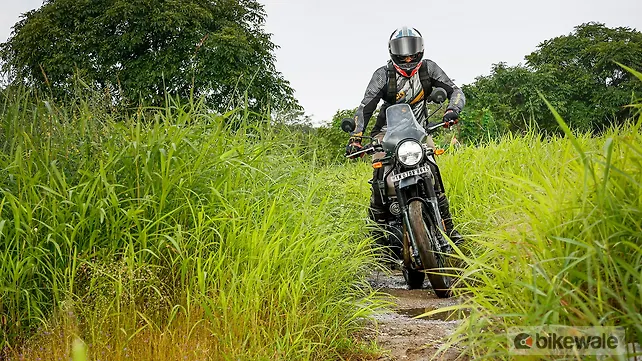
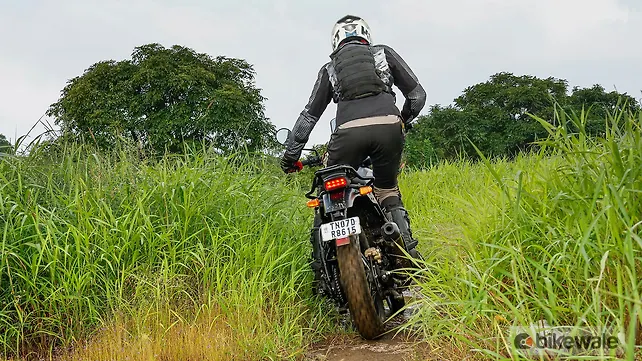
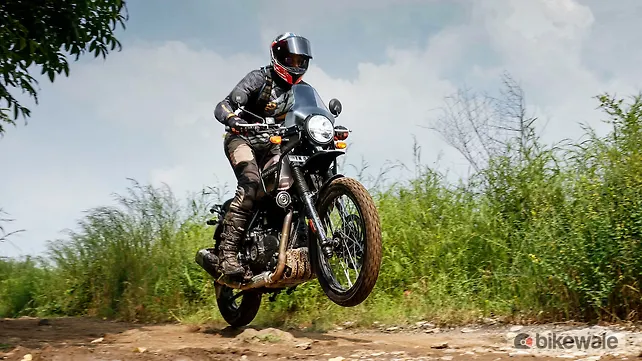
The Himalayan 440 feels like a tractor of sorts when you start ripping trails on the motorcycle. Yes, it is heavy, and you always feel that weight while going through technical sections. However, the suspension can absorb a lot of thrashing and bottoms out only on landing very big jumps. A dollop of low-end means escaping tricky or slippery situations is easy and the block-pattern tyres deliver phenomenal grip while keeping the tyre pressure slightly lower than on the road. And even if you’re on the taller side, standing up and riding the bike feels easy, courtesy of the high-set handlebar and the portion where the tank joins the seat being narrow.
Features and Technology
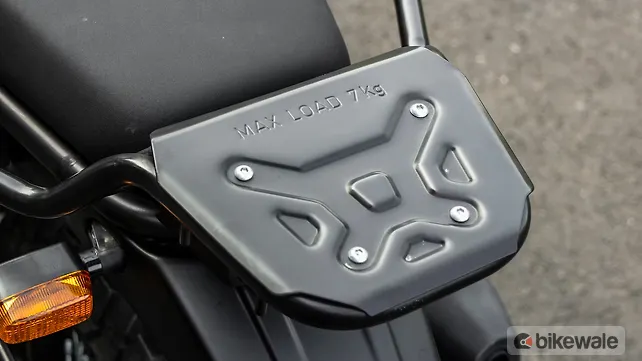
Royal Enfield has always kept electronics to a bare minimum on the OG Himalayan and the 440 follows the same pattern. In terms of safety aids, all you have is dual-channel ABS with the facility to turn it off for the rear wheel. The instrumentation comprises a simple semi-digital unit which shows only the essential data, while the Tripper offers turn-by-turn navigation. Moreover, there’s a USB-C charging port, and LED headlamp and tail lamp. It also gets a rear luggage rack which can now carry up to 10kg of load. This is a slight increase over the previous model due to the strengthening of the sub-frame. Touring enthusiasts can also choose lockable panniers from RE’s official accessory catalogue.
Fuel Efficiency
In our test, the Himalayan 440 returned a fuel efficiency of 30.6kmpl. The test was conducted in the city with traffic for the most part and some open roads. Now, considering its 15-litre fuel tank, you’re looking at a full tank range of around 459km, which is commendable. When ridden on the highway at steady speeds with gentle throttle inputs, the fuel efficiency should go up a little.
Conclusion
The Himalayan 440 is a no-nonsense, rugged, and purposeful adventure tourer. It is a versatile offering, one which can handle city commuting, off-roading, and touring with almost equal ease. The changes over the 411 certainly make it a better motorcycle, especially on the highway at higher speeds. It can also take you to the office on weekdays and bash some trails over the weekends. However, do remember that it comes with a few shortcomings, such as the heavier kerb weight, no tubeless spoke wheel option, and absence of electronic aids that are the norm even in lower segments.
If you’re someone who is looking for a truly capable adventure tourer with an affordable price tag, none of the niggles should make it a deal breaker. It is close to Rs. 80,000 cheaper than the newer Himalayan 450. Also, what makes it even more enticing is the fact that it comes at nearly the same price as the Himalayan 411 before it was discontinued in 2023.
Photography by Kaustubh Gandhi
Gallery
1/40
Royal Enfield Himalayan 440 Right Side View
Double Click to Zoom